

Essential best practices for stylish hat selection
TL;DR:
- Matching hat styles to face shapes enhances appearance and boosts confidence.
- Proper sizing and material choice are essential for comfort and climate suitability.
- Wide-brim hats with UPF50+ protection are crucial for sun safety in Australia and New Zealand.
Picking the right hat sounds simple until you’re standing in front of a wall of styles with no idea where to start. The wrong choice can throw off your whole look, sit uncomfortably, or leave you sunburned by noon. For Kiwis and Aussies, the stakes are even higher: intense UV, unpredictable weather, and a culture that takes outdoor living seriously. This guide cuts through the noise with practical, expert-backed tips on face shape matching, sizing, materials, sun safety, and quality markers. By the end, you’ll know exactly what to look for and why it matters.
Table of Contents
- Understand your face shape and the right hat styles
- Find your perfect fit: accurate sizing and comfort tips
- Choose materials according to climate and lifestyle
- Prioritize sun safety: brim width, UV ratings, and protection
- Style, craftsmanship, and where to buy premium hats
- A local perspective on hat selection: What most guides miss
- Upgrade your hat game: Find your perfect fit today
- Frequently asked questions
Key Takeaways
| Point | Details |
|---|---|
| Style matches face | Choosing a hat that flatters your face shape ensures both comfort and confidence. |
| Proper sizing is key | Accurate measurements and fit are crucial for maximizing hat comfort and longevity. |
| Choose climate-friendly materials | Select hat materials based on weather, UV risk, and your lifestyle needs. |
| Sun protection matters | Wide brims and UPF50+ certifications protect against harmful UV rays in AU/NZ. |
| Quality and care pay off | Investing in premium hats and proper care ensures better style and long-lasting performance. |
Understand your face shape and the right hat styles
Now that you’re aware of why hats matter, let’s start with the foundation of hat selection: your face shape. Getting this right is the single fastest way to look like you know what you’re doing, even if you just grabbed something off a shelf.
There are five main face shapes to know:
- Oval: Balanced proportions. Lucky you. Almost any hat style works, from fedoras to wide brims.
- Round: Soft, circular features. Go for taller crowns and angular brims to add definition. Avoid low, wide styles that emphasize width.
- Square: Strong jaw and wide forehead. Curved brims and mid-width crowns soften the angles nicely.
- Long (oblong): Narrow face with a longer length. Wide brims and shorter crowns balance the proportions. Avoid tall, narrow styles.
- Heart: Wide forehead, narrow chin. Medium brims and low crowns work best. Avoid wide-brimmed hats that draw attention upward.
As hat styling guides confirm, matching hat style to face shape is the most reliable path to a flattering result. It’s not about fashion rules for their own sake. It’s about visual balance.
The practical payoff is real. A well-matched hat makes you look more put-together without any extra effort. It also boosts confidence, which matters when you’re wearing something as visible as a hat. For more detail on choosing the right hat for your features and lifestyle, it’s worth going deeper into each style category.
One often-missed tip: tilt matters. A fedora worn straight sits differently than one angled slightly to the side. Experiment with placement before committing to a style. Small adjustments can shift a hat from “awkward” to “intentional” in seconds.
Find your perfect fit: accurate sizing and comfort tips
With your ideal style in mind, it’s just as important to make sure your chosen hat fits perfectly. A great-looking hat that slips over your eyes or pinches your temples is just a frustration waiting to happen.
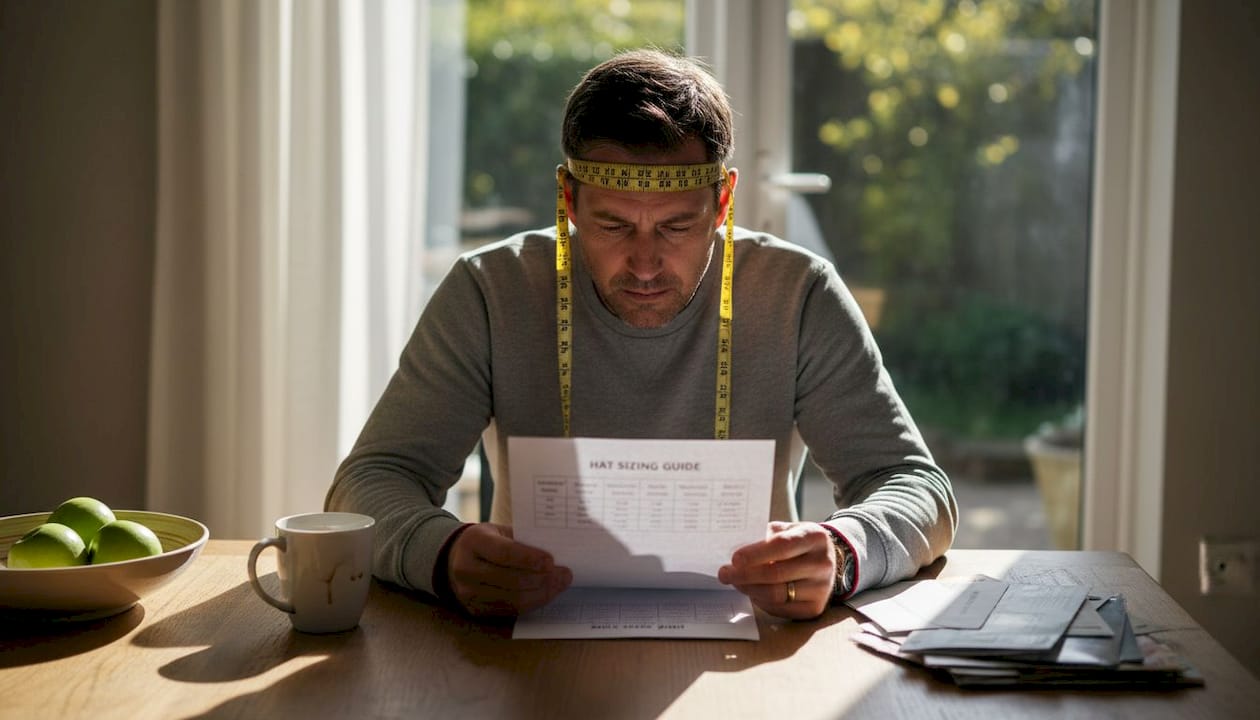
Here’s how to measure your head correctly:
- Grab a flexible tape measure or a piece of string.
- Position it 1/2 inch above your eyebrows and ears, keeping it level all the way around.
- Note the measurement in centimeters or inches.
- Compare against the brand’s size chart, since sizing varies between manufacturers.
- If you’re between sizes, consider the hat’s material. Wool stretches slightly; straw does not.
Average adult head circumference sits around 57 to 58 cm for men and 55 to 56 cm for women, but there’s plenty of variation. Don’t assume your size without measuring.
For a wool hat sizing guide specific to structured styles, the process has a few extra considerations around crown depth and band width.
Pro Tip: If you’re between sizes, size up rather than down. A slightly larger hat can be adjusted with sizing tape (a foam or ribbon insert that reduces the inner circumference). Sizing down rarely works well and can cause headaches on longer wear days.
Also factor in hair volume. If you wear your hair up, in braids, or in a bun, you’ll likely need to go up a size to account for the extra bulk. This is a common mistake that leads to returns and disappointment.
Choose materials according to climate and lifestyle
A flattering, well-fitted hat also needs the right material, especially when you consider the unique sun and climate demands down under. Material choice affects comfort, durability, protection, and how well a hat travels.
| Material | Best for | Key benefit | Watch out for |
|---|---|---|---|
| Wool/Cashmere | Cool to cold weather | Warmth, structure, shape retention | Can feel heavy in heat |
| Straw/Raffia | Summer, beach, outdoor events | Breathability, lightweight | Less durable, can crack |
| Synthetics | Active use, rain | Moisture-wicking, quick-dry | Can trap heat |
| Flexibraid® | Travel, high-UV outdoor use | Crush-resistant, UPF50+ rated | Higher price point |
For seasonal hat choices in New Zealand and Australia, the general rule is straightforward: wool and cashmere for cold, straw and raffia for warmth, and UPF50+ certified materials for high-UV conditions.
Key material pros and cons at a glance:
- Wool: Excellent shape retention, warm, works year-round in cooler regions. Avoid in humid heat.
- Straw: Ideal for NZ summer hats, breathable, stylish. Fragile under pressure.
- Synthetics: Great for hiking and rain. Less elegant for fashion-forward looks.
- Flexibraid®: ARPANSA-tested for UPF50+, crushes and recovers without damage. A top pick for travel and outdoor lifestyles.
ARPANSA certification (from the Australian Radiation Protection and Nuclear Safety Agency) is the local standard for UV protection testing. It’s the mark that tells you a product has been independently verified, not just labeled.
Prioritize sun safety: brim width, UV ratings, and protection
It’s not just about comfort. Sun safety is vital in this region. Australia and New Zealand have some of the highest UV index readings in the world, and the skin cancer statistics reflect that.
In Australia, 1 in 18 Australians will be diagnosed with melanoma by age 85. That’s not a small risk. Your hat is one of the most practical tools you have against it.
| Hat type | Brim width | UV protection level | Best use |
|---|---|---|---|
| Wide-brim fedora | 3+ inches | High | Outdoor events, beach |
| Bucket hat | 2-3 inches | Medium to high | Casual outdoor use |
| Baseball cap | 2-3 inches (front only) | Low (sides exposed) | Sports, casual wear |
| Legionnaire hat | Full coverage | Very high | Extreme sun exposure |
Wide brims and UPF50+ block up to 98% of UV rays, and tight weave density further boosts that protection. Loose weaves, even on wide-brim styles, can let significant UV through.
The Skin Cancer Foundation recommends hats with wide brims and materials that have been tested for UV protection, not just marketed as sun-safe.
For a style and function guide that covers both aesthetics and certified protection, it’s worth reviewing what UPF ratings actually mean in practice.
Pro Tip: A UPF50+ hat works best as part of a system. Pair it with UV-blocking sunglasses and broad-spectrum SPF30+ sunscreen on exposed skin. The hat handles the top and face; the sunscreen covers the neck and ears that even wide brims miss.
Style, craftsmanship, and where to buy premium hats
Finally, after nailing function, climate, and fit, don’t overlook style and quality. These are the hallmarks of a true premium hat experience, and they’re what separates a hat you wear once from one you reach for every day.
Signs of genuine craftsmanship include:
- Even, tight stitching with no loose threads or uneven seams
- Quality sweatband made from breathable, moisture-wicking material
- Structured brim that holds its shape without warping
- Consistent color with no fading or blotching in the fabric
- Branded hardware (buckles, eyelets) that doesn’t tarnish or loosen quickly
Premium headwear for AU/NZ demands both style and ARPANSA-tested practicality. A hat that looks great but falls apart after a season isn’t a bargain.
When it comes to where to buy, specialized online hat retailers consistently offer better range, sizing information, and return policies than general department stores. Look for retailers with detailed product descriptions, real customer reviews, and clear UV rating disclosures.
For a deeper look at the NZ hat style guide and what’s trending locally, or to explore fashion-forward headwear picks for Kiwis, there’s solid guidance on what’s working right now in Australasian fashion culture.
To make your investment last, store hats on a stand or in a box, away from direct sunlight. Spot-clean rather than machine wash where possible. A well-cared-for premium hat can look sharp for years.
A local perspective on hat selection: What most guides miss
Most hat guides are written for a global audience, which means they miss the specifics that actually matter here. Generic style advice doesn’t account for a UV index that regularly hits 11 or 12 in summer. It doesn’t factor in the wind off the Cook Strait or the sudden rain that hits Auckland on a clear day.
For Kiwis and Aussies, hat selection is genuinely functional, not just fashionable. That’s why local certifications like ARPANSA and UPF50+ ratings aren’t optional extras. They’re baseline requirements for anyone spending real time outdoors.
The other thing most guides skip is the travel and outdoor lifestyle angle. A hat that looks great at brunch but collapses in your bag on the way to Milford Sound isn’t serving you. Crush-resistant materials and packable designs matter here more than anywhere.
Our take at Urban Caps: buy for your conditions first, then your style. The best hat you own is the one you actually wear. For a closer look at Kiwi hat culture and how it shapes what works locally, it’s worth understanding the regional context before you shop.
Upgrade your hat game: Find your perfect fit today
Ready to put these best practices into action and elevate your headwear collection? At Urban Caps, we’ve built our range specifically for New Zealand and Australian conditions. Every style we carry is selected with UV protection, durability, and local lifestyle in mind.
Browse our curated selection of fedoras for a timeless, sun-smart look, or go straight to our bestselling woolen fedora for cooler months. We offer fast NZ delivery, real customer reviews, and a range that covers every face shape, head size, and season. Finding your perfect hat has never been more straightforward.
Frequently asked questions
How do I know which hat style matches my face shape?
Face shape determines the most flattering hat styles. Identify yours first, then match: fedoras for oval faces, angular crowns for round faces, and curved brims for square faces.
What size hat should I buy if I’m between sizes?
Size up for comfort and use sizing tape inside the band to fine-tune the fit if the hat feels slightly loose.
Why is UPF50+ important for hats in Australia and New Zealand?
UPF50+ blocks 98% of UV rays, which is critical given the extreme UV levels in this region and the high local rates of skin cancer.
What is Flexibraid® and why does it matter?
Flexibraid® is ARPANSA-tested for UPF50+ protection and is crush-resistant, making it ideal for travel and outdoor use in high-UV climates.
Where can I buy premium hats that balance style and sun safety?
Look for specialized hat retailers online that offer ARPANSA-certified, UPF-rated styles designed specifically for Australasian conditions and lifestyles.