

What makes a beanie premium: the 2026 guide for Kiwis
A premium beanie comes down to three things: the fibre it’s made from, how it’s constructed, and whether it holds up over time. Get all three right, and you’ve got a piece of headwear that earns its place in your wardrobe for years. Get any one wrong, and you’re replacing it before winter’s out.
Here’s what separates a genuinely high-quality beanie from the rest:
- Fibre quality: Fine Merino wool graded at 18.5 microns, cashmere from goat undercoat, or advanced anti-pill acrylic with recycled credentials
- Knitting gauge: 12-gauge or finer for a smooth, shape-retaining finish versus the looser weaves of budget options
- Construction details: Anti-pilling treatments, colourfast dyes, and reinforced cuff edges that keep the beanie looking sharp after repeated wear
- Fit and stretch: Stretch engineered into the knit structure itself, not reliant on elastic bands that dig into your forehead
- Durability signals: Double-knit construction, sealed seams, and consistent stitch tension throughout
- Sustainability markers: Certifications like the Global Recycled Standard (GRS) for recycled fibre content
- Brand credibility: Transparent sourcing, clear care instructions, and a track record of consistent quality
These aren’t just nice-to-haves. Each one directly affects how the beanie feels on your head, how long it lasts, and whether it still looks good after a full New Zealand winter.
What premium beanie materials actually deliver
The fibre is where premium starts. Everything else, from knitting gauge to finishing treatments, builds on the foundation of what the yarn itself can do.
Merino wool
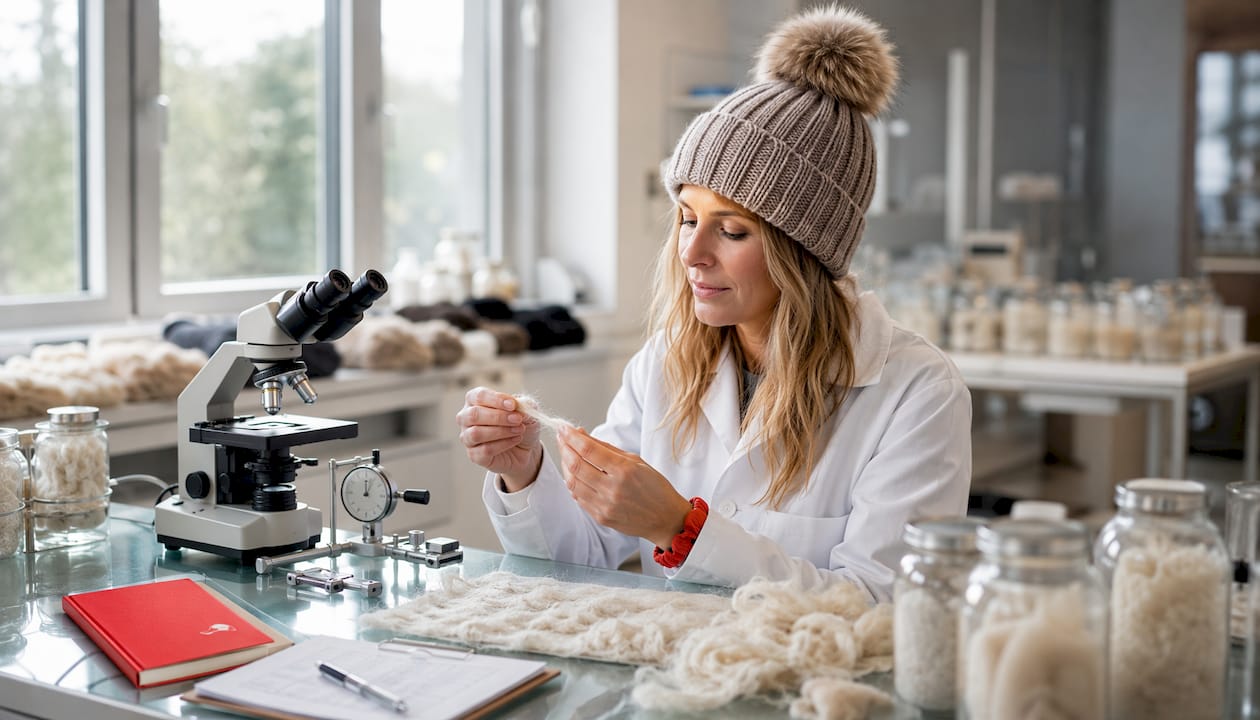
Merino wool is graded by fibre diameter, and a fibre diameter of 18.5 microns is considered the softness and luxury benchmark for premium Merino wool. At that fineness, the fibres bend rather than scratch, which is why Merino sits comfortably against skin that regular wool would irritate. It’s also naturally odour resistant, breathable, and thermoregulating, making it genuinely wearable across all seasons, not just deep winter. For New Zealand conditions, where you might go from a cold Dunedin morning to a mild Wellington afternoon, that temperature regulation is genuinely useful.
Merino is also more durable than cashmere and easier to maintain. A quality Merino beanie can handle a gentle machine wash, which matters for everyday wear. The premium wool hats category has grown significantly in New Zealand precisely because Merino ticks both the performance and comfort boxes.
Cashmere
Cashmere is considerably warmer than Merino wool per unit of thickness, which explains its luxury status. It comes from the fine undercoat of cashmere goats, and the yield per animal is small, which drives the price. The result is a fibre that’s exceptionally lightweight and insulating, with a softness that Merino doesn’t quite match.
The trade-off is care and durability. Cashmere is prone to pilling and requires hand washing or professional cleaning. It suits dry, cold conditions rather than active outdoor use. If you’re after a beanie for commuting or social wear in cooler months, cashmere delivers. For tramping or skiing, Merino is the more practical choice.
High-quality acrylic
Acrylic gets dismissed as a budget material, but that’s an outdated view. Modern high-quality acrylics, particularly those using advanced knitting technology, offer excellent durability, strong colourfast performance, and resistance to shrinkage. They’re also hypoallergenic, which matters for people with wool sensitivities.
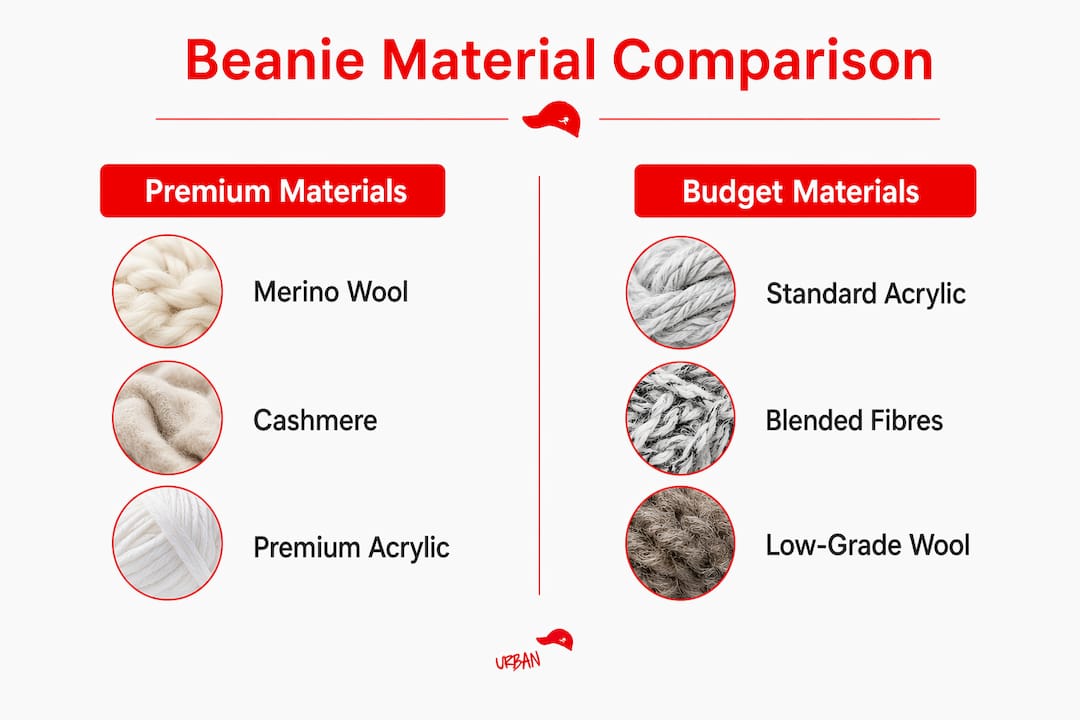
The key distinction is between standard acrylic and premium acrylic. Standard acrylic pills quickly and loses shape. Premium acrylic, especially recycled rPET variants certified under the Global Recycled Standard, maintains structural integrity across repeated washes and delivers moderate warmth without the bulk of natural fibres. For everyday wear and high-volume use, it’s a legitimate choice.
| Material | Warmth | Breathability | Durability | Care | Sustainability |
|---|---|---|---|---|---|
| Fine Merino wool (18.5 microns) | Excellent | Excellent | Very high | Machine wash (gentle) | Renewable, biodegradable |
| Cashmere | Outstanding | Good | Moderate | Hand wash only | Limited yield per animal |
| Premium acrylic (rPET/GRS) | Moderate | Moderate | High | Machine wash | Recycled fibre options available |
Pro Tip: When buying Merino, ask for the micron rating. Anything above 20 microns will feel noticeably coarser against your skin, especially around the forehead and ears.
How craftsmanship separates good beanies from great ones
Material quality sets the ceiling. Craftsmanship determines whether the finished product reaches it.
Knitting gauge and what it means
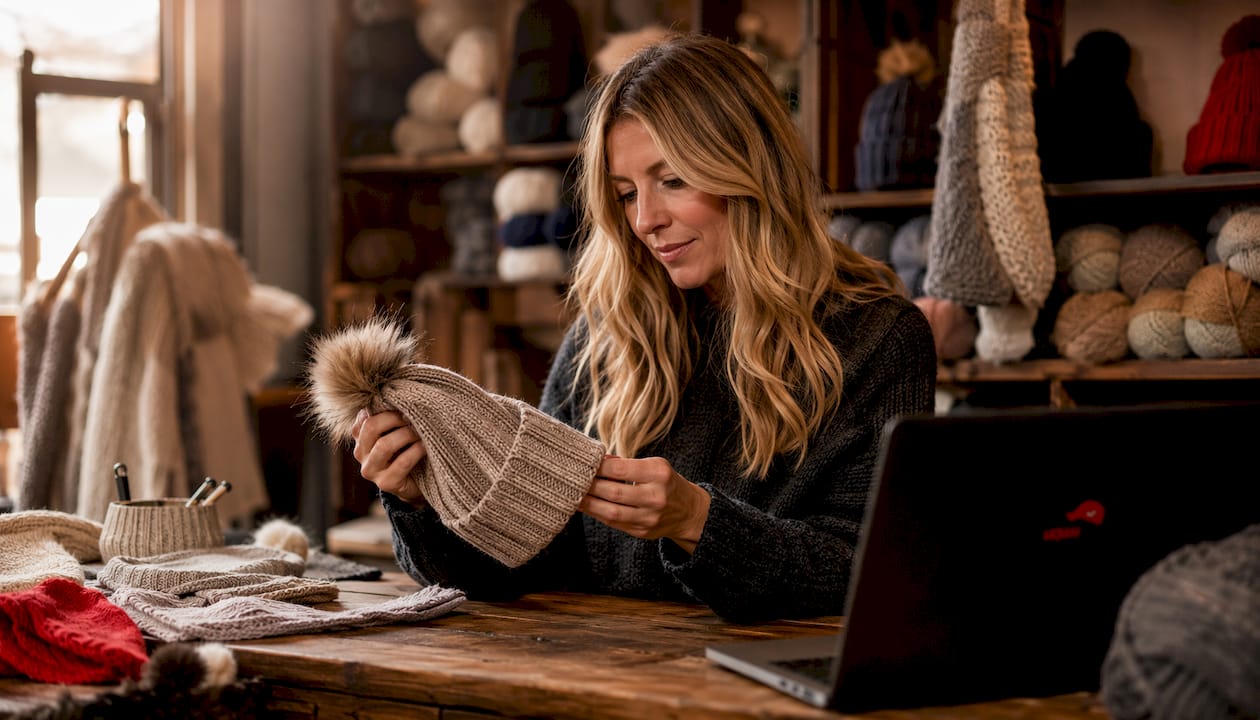
Gauge refers to the number of stitches per inch. A 12-gauge knit or higher produces a tight, flat surface with clean lines and better shape retention. A 3-gauge knit creates the chunky, thick look common in fashion beanies, which prioritises visual weight over fit precision. Fine gauges demand better yarn and tighter quality control throughout production, which is why they’re a reliable signal of premium construction.
Gauge also affects thermal properties. Finer gauges trap air more evenly across the fabric, producing consistent warmth without hot spots. Chunky knits look warm but can be uneven in insulation, particularly around the ears and cuff.
Construction quality markers
- Anti-pilling treatments: Applied during finishing, these prevent the fibre surface from balling up after friction. Without them, even a quality yarn will look worn within a season.
- Colourfast dyes: Premium beanies use dyes that resist fading through washing and UV exposure. Dark and saturated shades are the hardest to maintain, so colourfast performance in navy, black, or deep burgundy is a genuine quality test.
- Reinforced cuff edges: The cuff takes the most stress during wear and removal. Reinforced edges hold their shape and prevent the unravelling that plagues cheaper beanies.
- Engineered stretch: Premium construction builds stretch into the knit structure itself. This avoids the forehead pressure that elastic bands create during prolonged wear, and it means the beanie recovers its shape after stretching rather than staying deformed.
- Consistent stitch tension: Uneven tension creates weak points that stretch or tear under normal use. A quality manufacturer controls tension throughout the knitting process, not just at the sample stage.
Pro Tip: Turn a beanie inside out before buying. Loose threads, uneven seams, or exposed elastic are immediate signs of shortcuts in construction. The inside of a premium beanie looks almost as clean as the outside.
The combination of these elements is what headwear craftsmanship actually means in practice. It’s not one feature but the sum of decisions made at every stage of production.
Style, warmth, and functional features worth knowing
A premium beanie doesn’t just perform well. It fits your life, your climate, and how you want to look wearing it.
Beanie styles and their practical differences
- Cuffed beanies: The folded cuff creates a double layer directly over the ears, maximising localised insulation. The rigid fold also gives the beanie structure, which helps it hold its shape on the head. This is the most versatile style for New Zealand winters.
- Fisherman beanies: Shallow crown, tight rib-knit construction, worn above the ears. This is a fashion-forward style rather than a cold-weather workhorse. It suits mild Auckland winters or layered urban looks.
- Slouchy beanies: An elongated crown with looser knit tension creates the deliberate droop at the back. Comfortable and relaxed in fit, though the looser construction typically means less insulation than a cuffed style.
- Short/skullcap beanies: Dense stitching conforms closely to the head with no excess fabric. These are the go-to for under-helmet use in snowboarding, cycling, or construction, where bulk is a problem.
Warmth features beyond the fibre
Double-layer construction, whether through a folded cuff or a fully lined crown, adds meaningful insulation without increasing the weight of the yarn. Micro-fleece linings are increasingly common in premium beanies and deliver a noticeable improvement in warmth and comfort, particularly with rougher wool blends. They also create a softer contact surface against the skin, which matters for people who find even fine Merino slightly scratchy.
Colour and finish also play a role in how a beanie reads as premium. Muted, tonal palettes in charcoal, oatmeal, forest green, and navy tend to signal quality more reliably than bright or novelty colours, simply because they require better dye control to look clean. Tactile finishes, such as brushed surfaces or cable-knit textures, add visual depth and a hand-feel that distinguishes a premium piece from a flat, mass-produced one.
Fit and sizing
A well-made premium beanie fits most head sizes without elastic assistance, because the knit structure itself provides the right amount of stretch and recovery. One-size-fits-most (OSFM) sizing works when rib-knit construction is used, as rib knit delivers maximum horizontal elasticity. If a beanie feels tight immediately on, it will feel worse after an hour. If it slides down, the gauge or yarn weight is wrong for the construction.
The benefits of premium headwear for comfort come down to this: a beanie that fits correctly and stays put without pressure is one you’ll actually wear, which is the whole point.
How to care for a premium beanie properly
Premium materials reward careful maintenance. The difference between a beanie that lasts two seasons and one that lasts ten often comes down to how it’s washed and stored.
- Check the care label first. Merino wool can usually handle a gentle machine cycle in cold water. Cashmere needs hand washing in cool water with a wool-specific detergent. Premium acrylic is the most forgiving and handles regular machine washing well.
- Use a mesh laundry bag. For both Merino and cashmere, a mesh bag reduces friction during washing, which directly reduces pilling on the surface.
- Avoid wringing or twisting. After washing, press the beanie gently against the side of the basin to remove water. Twisting distorts the knit structure and can permanently stretch the shape.
- Air dry flat on a towel. Lay the beanie on a clean, dry towel and reshape it by hand while damp. Hanging a wet beanie causes it to stretch under its own weight, particularly at the cuff and crown.
- Store folded, not hung. Hanging a beanie on a hook over time creates a permanent stretch point at the hang location. Fold it flat and store it in a drawer or on a shelf.
- Deal with pilling early. A fabric shaver (also called a lint shaver) removes pills cleanly without damaging the underlying fibre. Using one after the first few wears keeps the surface looking fresh and prevents pills from embedding deeper into the knit.
- Seasonal storage. At the end of winter, clean the beanie before storing it. Oils and residue from wear attract moths and degrade natural fibres over time. Store in a breathable cotton bag, not a sealed plastic bag, which traps moisture.
Pro Tip: For cashmere beanies, add a cedar block to your storage area. Cedar naturally deters moths without the chemical smell of mothballs, and it won’t transfer any odour to the fibre.
Pilling happens when short fibre ends work their way to the surface and tangle together through friction. Anti-pilling treatments applied during manufacturing slow this process significantly, but no treatment eliminates it entirely. The best defence is a combination of quality yarn, careful washing, and a fabric shaver used regularly.
The real value case for premium beanies
The upfront cost of a premium beanie is higher. The cost-per-wear calculation tells a different story.
A cashmere or fine Merino beanie worn regularly across multiple seasons tends to deliver more value per wear than a budget acrylic beanie replaced every year. Cost-per-wear analysis consistently shows that premium fibres, despite higher initial prices, deliver better long-term value through longevity and sustained performance.
The maths works because premium beanies don’t degrade at the same rate. A quality Merino or cashmere piece retains its shape, colour, and softness across multiple seasons when cared for correctly. A budget acrylic beanie typically pills, fades, and loses elasticity within one season of regular wear.
| Factor | Premium beanie | Budget beanie |
|---|---|---|
| Typical lifespan | 3–7+ seasons | 1–2 seasons |
| Pilling resistance | High (anti-pill treatment) | Low to moderate |
| Colourfast performance | Strong (premium dyes) | Fades within season |
| Warmth-to-weight ratio | Excellent (natural fibres) | Moderate |
| Care requirements | Moderate (gentle wash) | Low (machine wash) |
| Replacement frequency | Rare | Annual or more |
The warmth-to-weight ratio of natural fibres is a practical advantage beyond cost. Fine Merino and cashmere deliver more insulation per gram than standard acrylic, which means a premium beanie can be thinner and lighter while keeping you warmer. That matters on a Wellington commute or a Queenstown ski day, where bulk is inconvenient but warmth is non-negotiable.
Sustainability adds another layer to the value case. Recycled rPET acrylics certified under the Global Recycled Standard reduce petroleum reliance while maintaining the durability of virgin synthetic fibres. Choosing a beanie with verified sustainable credentials means your purchase aligns with responsible sourcing, not just marketing claims.
Why Urbancaps knows premium beanies for New Zealand
Urbancaps is a New Zealand-owned headwear specialist that has built its range around quality materials, honest construction, and styles suited to Kiwi conditions. The range covers everything from fine-knit wool blends to fashion-forward styles, with a focus on pieces that hold up through real New Zealand winters rather than just looking good on a product page.
A few things set the Urbancaps approach apart for local shoppers:
- NZ climate fit: Products are selected with New Zealand’s variable conditions in mind, from the wet cold of the South Island to the milder but windy North Island winters.
- Quality construction standards: Anti-pilling finishes, reinforced cuffs, and colourfast dyes are standard expectations across the range, not premium add-ons.
- Transparent product information: Fibre content, care instructions, and sizing guidance are clearly listed, so you know exactly what you’re buying before it arrives.
- Fast NZ delivery: Orders ship within New Zealand, which means no long waits and no international shipping surprises.
- Trusted by Kiwis nationwide: The Urbancaps customer base spans the country, with reviews reflecting consistent satisfaction with fit, warmth, and durability.
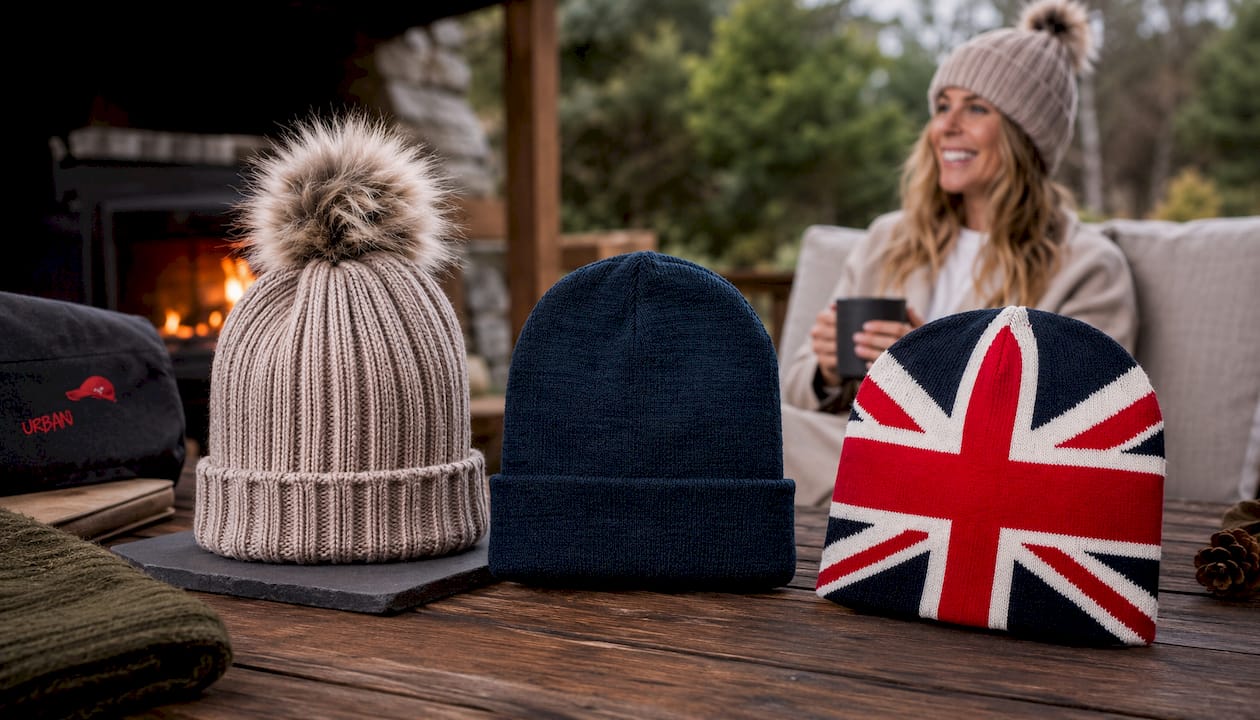
If you’re ready to invest in a beanie that earns its place in your wardrobe, the Urbancaps range has options across every premium category. The Premium Wool Blend Beanie with its extra-warm knit and roll-up cuff is built for serious New Zealand winters, with reinforced construction and a fit that works for most head sizes. For something with a bit more personality, the Premium Winter Knit Beanie with faux fur pom delivers warmth and style in equal measure. The English Flag Knitted Beanie in premium soft cotton blend rounds out the range for those after a lighter, fashion-forward option.
Key takeaways
A premium beanie is defined by fibre quality, knitting gauge, and construction details that together deliver lasting comfort, warmth, and shape retention across multiple seasons.
| Point | Details |
|---|---|
| Fibre quality sets the standard | Fine Merino wool at 18.5 microns, cashmere, or certified premium acrylic determines comfort and performance. |
| Knitting gauge signals craftsmanship | A 12-gauge knit or finer produces cleaner lines, better shape retention, and more consistent warmth. |
| Construction details drive durability | Anti-pilling treatments, colourfast dyes, and reinforced cuff edges are the markers of a beanie built to last. |
| Cost-per-wear favours premium | Premium fibres last 3–7+ seasons versus 1–2 for budget options, making the higher upfront cost worthwhile. |
| Care extends lifespan significantly | Air drying flat and storing folded preserves knit structure and prevents the shape loss that shortens a beanie’s life. |
FAQ
What materials make a beanie high quality?
Fine Merino wool (graded at 18.5 microns), cashmere, and premium anti-pill acrylic are the three main markers of a high-quality beanie. Each offers a different balance of warmth, softness, durability, and care requirements.
How much should you pay for a good quality beanie?
A genuinely premium beanie typically costs more upfront than a budget option, but cost-per-wear analysis shows the investment pays off over multiple seasons. Merino and cashmere beanies last 3–7+ seasons with proper care, making them more economical over time than cheaper alternatives replaced annually.
How do you tell if a beanie is well made?
Check the knitting gauge (finer is better), look for anti-pilling treatments, reinforced cuff edges, and colourfast dyes. Turning the beanie inside out reveals stitch consistency and seam quality, which are reliable indicators of construction standards.
How do you choose the right beanie for New Zealand conditions?
For cold South Island winters, a cuffed Merino or wool blend beanie with double-layer construction delivers the best warmth. For milder North Island conditions or active outdoor use, a fine-gauge Merino beanie offers the right balance of breathability and insulation. Cashmere suits dry, cold days and social wear rather than high-activity use.
Does a premium beanie really last longer than a cheap one?
Yes. Premium beanies with anti-pilling treatments, quality dyes, and reinforced construction hold their shape, colour, and softness across multiple seasons. Budget acrylic beanies typically pill, fade, and lose elasticity within a single season of regular wear.