


What is local hat manufacturing explained
TL;DR:
- Most local hat manufacturing involves skilled artisans working through numerous traditional steps, often up to 90, to produce high-quality headwear.
- This process supports community employment, preserves traditional crafts, and results in durable, natural-fibre hats with traceable origins.
Most people assume hats are made in overseas factories by the millions, on fast conveyor belts with minimal human involvement. That assumption is wrong, or at least incomplete. What is local hat manufacturing, really? It is a hands-on, often labour-intensive process where skilled workers produce headwear using a combination of traditional techniques and locally sourced materials. It is also one of the few remaining manufacturing sectors where individual craftsmanship still drives quality outcomes. This guide breaks down the full picture: how hats are made locally, what types are produced, and why it matters.
Table of Contents
- Key takeaways
- The local hat production process
- Types of locally made hats
- Benefits of local hat manufacturing
- Challenges facing local hat manufacturers
- My take on local hat manufacturing
- Locally made headwear from Urbancaps
- FAQ
Key takeaways
| Point | Details |
|---|---|
| Local production is labour intensive | Traditional local hat manufacturing can involve up to 90 steps, from carding wool to final hand finishing. |
| Many hat types are made locally | Felt hats, fedoras, cowboy hats, and beanies are all produced locally using natural fibres and skilled techniques. |
| Local manufacturing benefits communities | Local production supports jobs, preserves traditional skills, and reduces the environmental footprint of long supply chains. |
| Quality control is manual and multi-stage | Local makers rely on hands-on inspection at multiple stages, catching flaws that automated lines routinely miss. |
| Local manufacturers face real challenges | Cost pressures and global competition mean local producers must innovate and connect deeply with their communities to survive. |
The local hat production process
When people ask how hats are made locally, they often expect a simple answer. Cut some fabric, sew it together, done. The reality is far more involved. Traditional hat manufacturing can require up to 90 distinct steps before a finished hat leaves the workshop. That figure surprises most people, and it should reshape how you think about the price tag on a locally made piece.
The process begins with raw materials. Wool, rabbit fur felt, and other natural fibres are cleaned and prepared before anything resembling a hat comes into view. This preparation stage alone involves carding (separating and aligning fibres), dyeing to achieve consistent colour, and treating fibres to build the density needed for a durable hat body.
From raw fibre to shaped hat
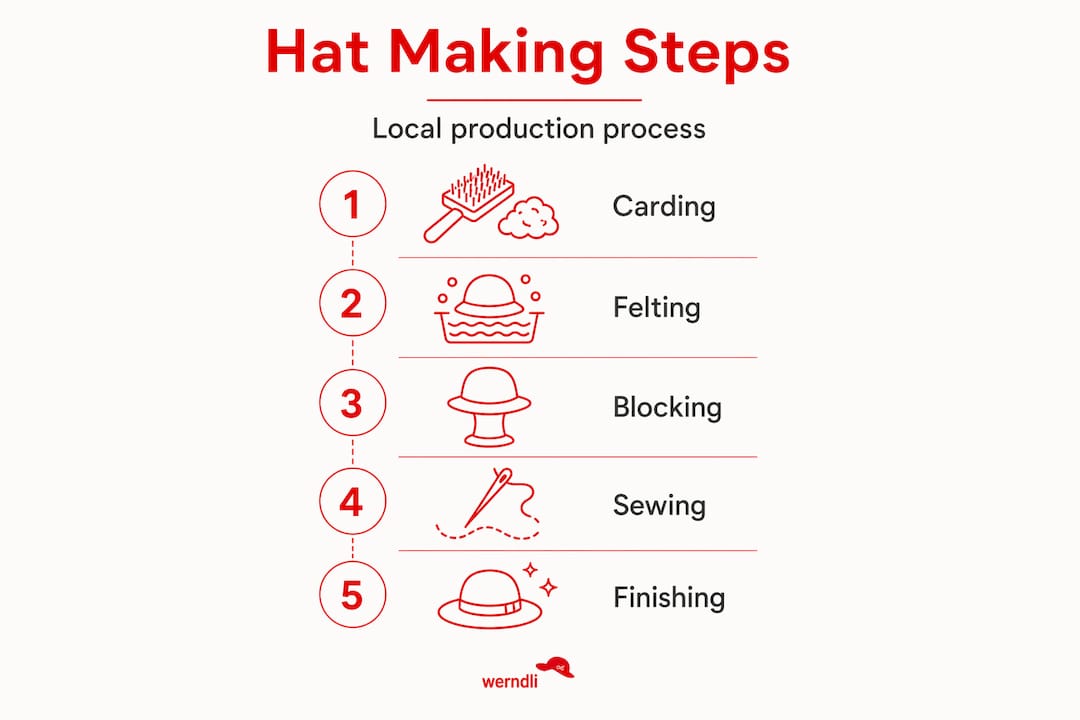
Once the base material is ready, the real shaping work begins. Here is a typical sequence of production stages in local hat manufacturing:
- Carding — raw fibres are combed and aligned to create a uniform base material.
- Felting — fibres are matted together using heat, moisture, and pressure to form a solid cone or hood shape.
- Dyeing — the hood is submerged in dye baths to achieve the intended colour evenly throughout the material.
- Wet pressing — the damp hat hood is pressed and moulded to begin forming its basic silhouette.
- Blocking — the hat is stretched over a wooden or metal block shaped to the intended crown size and style.
- Finger blocking — skilled workers use their hands to push the brim and crown into precise shape, a step that cannot be replicated by machine.
- Pouncing (sanding) — the surface of the hat is carefully sanded to achieve a smooth, even finish.
- Trimming and lining — sweatbands, linings, ribbons, and brims are cut, fitted, and attached.
- Quality inspection — finished hats are examined by hand for symmetry, structural integrity, and surface consistency.
- Final fit and finish — any last adjustments are made before the hat is labelled and prepared for sale.
Pro Tip: When assessing a locally made hat, run your thumb along the inner sweatband. Locally made hats almost always feature a stitched, not glued, sweatband. Glued bands are a reliable sign of mass production shortcuts.
| Production step | Purpose |
|---|---|
| Carding | Aligns fibres for consistent density |
| Felting | Creates the solid base material |
| Blocking | Establishes the hat’s structural shape |
| Finger blocking | Adds precision shaping by skilled hands |
| Pouncing | Smooths the surface for clean finish |
| Quality inspection | Catches flaws before the hat reaches the customer |
There is also a meaningful distinction between local hat manufacturing and custom millinery. Manufacturing, even when done locally, follows a repeatable production process aimed at producing consistent styles in larger volumes. Custom millinery, on the other hand, maps the individual client’s head shape using bespoke tools, involves hand-sewing at nearly every stage, and produces one hat specifically for one person. Both sit under the broader umbrella of the hat making industry, but they represent different ends of the craftsmanship spectrum. Bespoke millinery involves individual head-shape mapping and hand finishing that no factory line can replicate.
Types of locally made hats
Not every hat type is equally suited to local production. Some styles demand the kind of precise hand work that local workshops do well. Others are so volume dependent that offshore mass production has effectively taken over. Understanding the types of locally made hats helps you know what to look for.
Here is a breakdown of hat types commonly produced by local manufacturers, along with the materials and craftsmanship qualities that define them:
- Felt fedoras and trilby hats — made from wool felt or rabbit fur felt, these styles require extensive blocking and pouncing. The precise brim shape and crown pinching are achieved by hand, making them ideal candidates for local production.
- Cowboy hats — structured hats with wide brims and specific crown dents. Local producers use stiff felt or straw, with hand-shaping critical to achieving the characteristic silhouette. Authenticity in this style is almost entirely dependent on manual skill.
- Flat caps and dad hats — constructed from wool, tweed, or cotton blends, these styles involve precision cutting and stitching. Local makers often source fabric domestically, supporting regional textile suppliers.
- Beanies and knitted hats — locally produced beanies frequently use merino wool or other natural fibres. The knitting pattern, yarn weight, and finish are chosen for durability and warmth suited to local climates, such as the cooler months across New Zealand and southern Australia.
- Seasonal work and farmer hats — wide-brimmed sun hats made from natural straw or woven fibres. Local production allows these to be tailored for regional sun conditions and occupational requirements.
- Berets — flat, round hats traditionally made from wool felt. Local production of berets relies heavily on the felting and blocking steps to achieve the right drape and structure.
What these hat types share is a reliance on natural fibres and hands-on techniques. Locally made versions of each style use materials that can be traced back through a shorter, more transparent supply chain. Sustainability considerations are embedded in these choices: shorter supply chains mean fewer transport emissions, and natural fibres decompose at end of life rather than adding to synthetic textile waste.
Benefits of local hat manufacturing
The case for supporting local hat manufacturing goes beyond nostalgia. There are specific, measurable advantages for consumers, businesses, and communities.
Quality you can see and feel
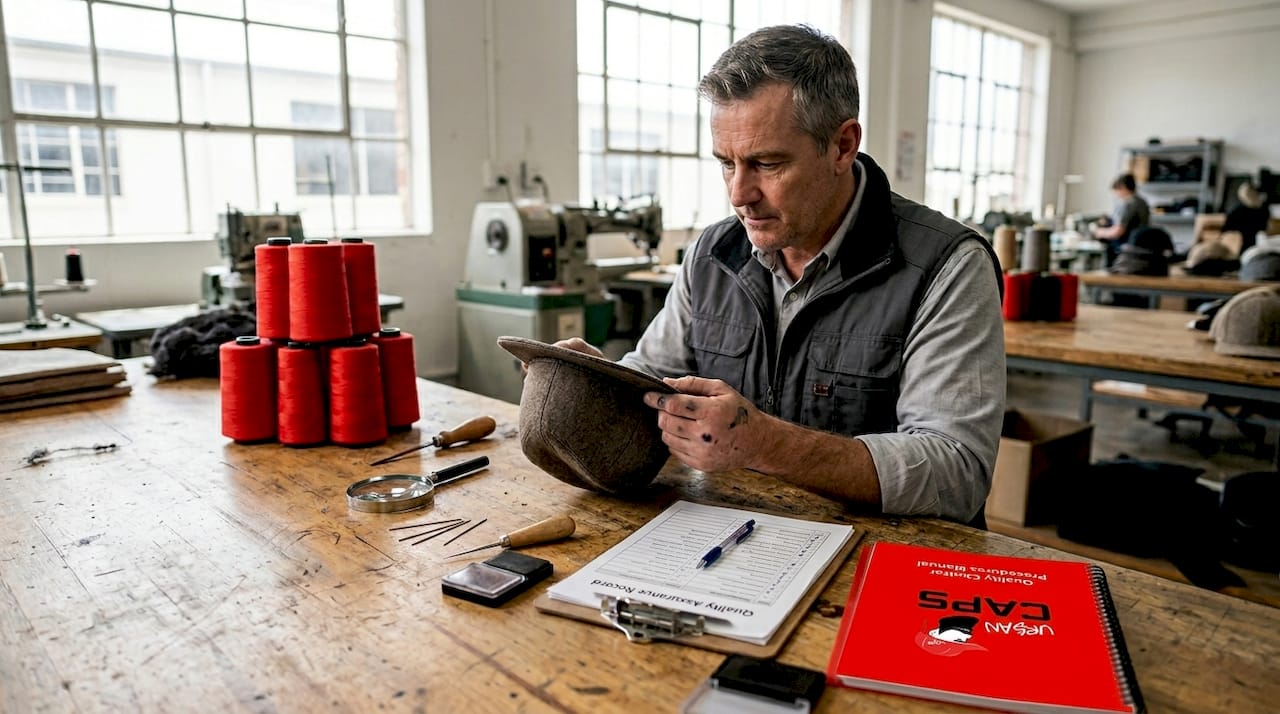
Manual quality control in local hat manufacturing is a multi-stage process where inspection teams examine stitching, fit, and surface finish by hand. Machines calibrated for speed can miss a misaligned sweatband or an uneven brim edge. A skilled worker checking the same hat will not. This hands-on approach is what gives locally made hats their reputation for consistency and durability.
Pro Tip: Ask the retailer or maker directly whether the hat’s sweatband is hand-stitched and whether the brim has been hand-blocked. If they can answer confidently, you are dealing with genuine local craftsmanship.
Environmental and economic value
Local production reduces reliance on long international shipping routes. Smaller batch production also tends to generate less material waste compared to high-volume overseas factories running 24-hour production cycles. When manufacturers use natural fibres like wool or cotton, the environmental benefit compounds: these materials biodegrade, and local sourcing further reduces the carbon footprint of the finished product.
The economic argument is equally clear. One local manufacturer created more than 70 local jobs and produced over 4 million hats, demonstrating that local manufacturing can reach meaningful scale while keeping employment and spending within the community. For every hat purchased from a local maker, a greater proportion of that spending stays in the local economy compared to buying an imported product.
| Factor | Local hat manufacturing | Mass-produced imported hats |
|---|---|---|
| Quality control | Manual, multi-stage inspection | Automated or minimal inspection |
| Material traceability | High, shorter supply chain | Often low, complex global supply chain |
| Environmental footprint | Lower transport emissions, natural fibres | Higher shipping impact, often synthetic materials |
| Economic contribution | Local wages and jobs retained | Wages and profits flow offshore |
| Customisation potential | High, can adapt to specific styles | Low, fixed production runs |
| Craftsmanship | Skilled artisan techniques | Standardised machine processes |
Preserving traditional skills
There is something that does not show up in a spreadsheet: the knowledge carried by experienced hat makers. Traditional hat manufacturing techniques, including finger blocking, pouncing, and hand-stitching sweatbands, take years to learn. When local factories close, that knowledge often disappears with them. Supporting local hat manufacturing is one of the more direct ways consumers and businesses can help preserve these skills for the next generation of makers.
Challenges facing local hat manufacturers
Understanding what is local hat manufacturing also means being honest about its difficulties. Local producers face genuine structural pressures that deserve more than a passing mention.
- Cost of local labour — skilled hat making is time-consuming. An experienced artisan might produce only two hats a day. This labour intensity drives up per-unit costs that overseas factories, with lower wage structures and automated processes, can comfortably undercut.
- Machinery and maintenance — specialist hat-making equipment is ageing, often irreplaceable, and expensive to maintain. One well-known local producer, Bollman Hat Co., relies on century-old machines and employs a dedicated team just to keep them running.
- Market share pressure — even factories with deep heritage struggle to compete on volume. Bollman Hat Co. produces only 23% of its global sales at its local US factory, with the remainder sourced offshore.
- Changing fashion cycles — fast fashion trends shorten the commercial lifespan of hat styles. Local producers who specialise in a small number of classic styles can be caught out when consumer preferences shift quickly.
- Consumer price sensitivity — many buyers, particularly in the casual retail segment, default to cheaper imported options without knowing or asking about the manufacturing origin of what they are buying.
The companies that survive these pressures share a common trait. Research on successful local manufacturers shows that adaptability and community connection among workers and customers are key differentiators. The local manufacturers who thrive tend to tell their story well, build genuine relationships with buyers, and adapt their product range rather than standing still while the market moves around them. Niche marketing, customisation services, and direct-to-consumer selling are practical paths that several local hat makers have used to stay relevant and financially viable.
My take on local hat manufacturing
I have spent a lot of time looking at where headwear actually comes from. What strikes me most is how rarely that question gets asked. Consumers notice the style, the price, and maybe the material. The origin? Almost never.
That is starting to shift. From what I have observed, there is a genuine and growing segment of consumers and businesses who are asking harder questions about what they wear and where it was made. They are not doing it purely for ideological reasons. They are doing it because they have noticed the difference in quality. A locally made felt fedora, blocked by hand and inspected before it leaves the workshop, simply holds its shape and character longer than a pressed import.
What I find most interesting is the customisation opportunity. Local hat makers who offer genuine personalisation, whether through bespoke sizing, custom trims, or short-run branded batches, have something mass production genuinely cannot offer. That is not a small thing for businesses looking to create branded merchandise or gifts with real quality behind them.
My honest view is that the hat making industry is not dying. It is consolidating around producers who understand their value and communicate it clearly. The ones who survive will be the ones who connect their craft to a community of people who care about quality, origin, and longevity. And with more consumers actively seeking premium hat quality, there is real room for local makers to hold ground and grow.
— Urban
Locally made headwear from Urbancaps
If this guide has made you think differently about where your hat comes from, that is exactly the point. At Urbancaps, we back local craftsmanship and bring you headwear built to last. Proudly NZ owned and operated, we carry a range of quality hats, from classic fedoras and flat caps to beanies, cowboy hats, and berets, all selected with durability and design in mind.

We are trusted by Kiwis nationwide because we do not compromise on quality or cut corners on service. Free shipping on all NZ orders. Fast delivery. Real support when you need it. Browse the full Urbancaps headwear range and find your next favourite hat, made to suit your lifestyle and built to go the distance.
FAQ
What is local hat manufacturing in simple terms?
Local hat manufacturing is the production of hats within a country or region using local labour, materials, and facilities, often involving traditional hand techniques across multiple production stages.
How many steps does it take to make a hat locally?
Traditional local hat production can involve up to 90 steps, including carding, felting, dyeing, blocking, pouncing, and hand finishing before a hat is ready for sale.
What are the main benefits of buying locally made hats?
Locally made hats offer higher quality control through manual inspection, support local jobs and traditional skills, and typically use natural fibres with a lower environmental footprint than mass-produced imports.
How do locally made hats differ from imported hats?
Local hats are generally shaped and inspected by hand, made in smaller batches with traceable materials, and built for durability. Imported mass-produced hats prioritise volume and low cost, often at the expense of craftsmanship and material quality.
What types of hats are most commonly made locally?
Felt fedoras, cowboy hats, flat caps, beanies made from merino wool, wide-brimmed work hats, and berets are among the hat types most frequently produced by local manufacturers using traditional techniques.