



To clean a suede cap, brush off the dry dirt first, then spot-treat marks with a barely damp white cloth, blot instead of rubbing, and let the cap dry naturally on a shape-holding support. Finish by brushing the nap back into place. Never soak it, never put it in the washing machine and never dry it near a heater. That is the whole method. The rest of this guide covers the detail: what tools to use, how to handle different marks, whether vinegar is worth trying and how to keep your cap looking good once it is clean.
TL;DR
- Start dry: a soft suede brush removes dust and dried mud before any moisture touches the cap.
- Check the care label first, then test any cleaner on a hidden spot such as inside the back strap area.
- Blot marks with a lightly damp white cloth. Do not rub, scrub hard or soak.
- Dry flat or stuffed to hold shape, away from heaters and direct sun, then brush the nap to lift it.
- Protect the clean cap with a suede protector spray and store it somewhere dry and ventilated.
Table of Contents
- Know what your suede cap is made of
- What you need
- Step-by-step: clean a suede cap at home
- Which method for which mark
- Does vinegar clean suede?
- When to see a professional
- Protect the cap after cleaning
- Common mistakes to avoid
- Our view: why we say less is more with suede
- Need a new suede cap?
- FAQ
- Sources
Know what your suede cap is made of
Before you pick up a cloth, work out what you are cleaning. Suede caps come in two main types, and they behave differently.
Real suede is leather with the underside buffed to a soft, velvety nap. It is absorbent, so water can leave dark patches and stiffen the surface as it dries. It needs a gentle hand and as little moisture as possible.
Vegan or faux suede is a fabric (usually a polyester-based microfibre) made to look and feel like suede. It tolerates a little more moisture than real suede, but it still has a nap that flattens when it is scrubbed, and the cap’s structure can still warp if you soak it.
The care label is the first place to look. In New Zealand, the Commerce Commission says new textile goods, including suede, must carry care information, and that following those instructions makes an item less likely to be damaged and more likely to last. If the label on your cap says dry clean only, do not argue with it. If the label has a warning such as do not tumble dry, treat it as a hard rule.
No label, or it has worn away? Treat the cap as real suede. It is the more cautious assumption, and the method below works for both types.

What you need
You do not need a specialist kit. Most of this is already in the house.
- A suede brush with soft bristles (a clean, soft toothbrush works for small areas). Some brushes have a rubber or crepe side for lifting marks.
- A suede eraser or a clean, plain white pencil eraser, for dry scuffs and shiny spots.
- Two or three clean white cloths or microfibre towels. White matters because it shows you straight away if dye is lifting off the cap.
- Lukewarm water in a small bowl.
- Mild detergent or baby shampoo, only if a mark needs more than water.
- Clean towels or a rolled-up tea towel to stuff the crown while it dries.
- A suede protector spray for afterwards.
Skip anything with bleach, strong solvents, scented sprays or heavy foaming ingredients. They can strip colour and leave rings.
Step-by-step: clean a suede cap at home
1. Brush off the dry dirt
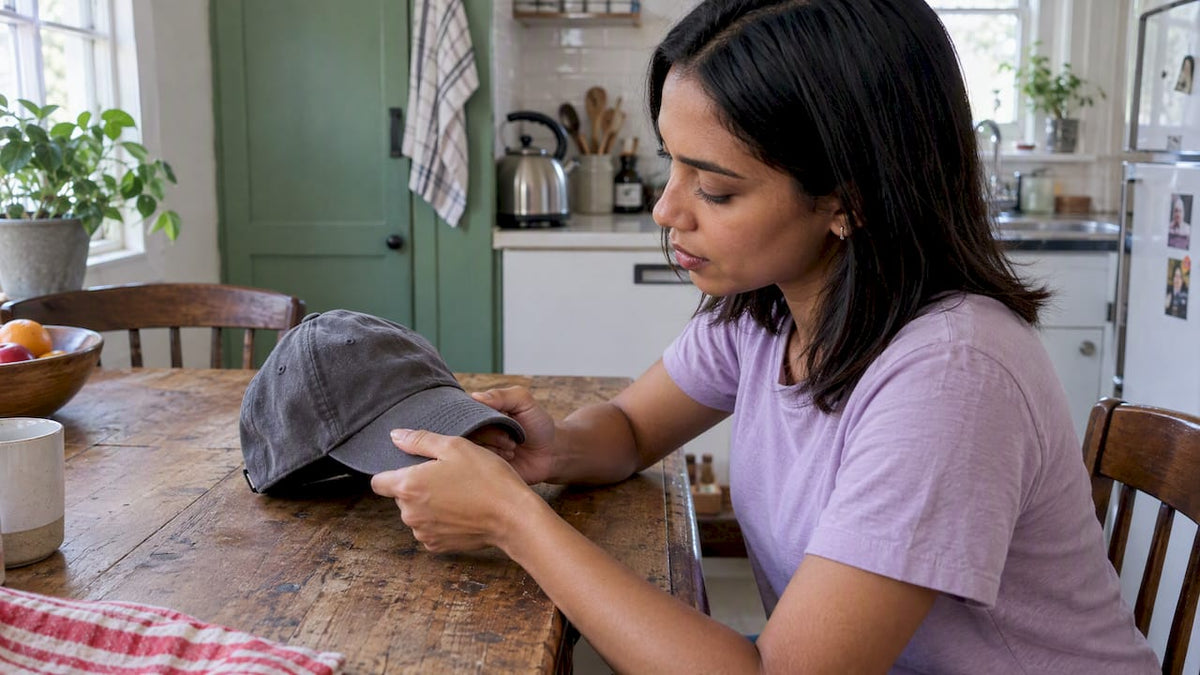
Hold the cap steady with one hand inside the crown. Brush in one direction with short, light strokes, working from the front panel back to the rear. Then do the brim and the sides. Dry dust, lint and dried mud come off best before anything is wet, because moisture turns dust into paste that sinks into the nap.
If the nap looks flat or shiny on the brim edge, brush gently against the direction, then smooth it back with the grain. That is often enough to make a cap look noticeably fresher before you even use water.
2. Try a suede eraser on dry marks
Scuffs, scratches and light dry marks often lift with an eraser. Rub in small, light motions on the mark only, then brush away the crumbs. Use the eraser as a first resort for anything that is not a wet or oily stain. It is gentle, and it keeps water out of the picture.
3. Test before you treat
Consumer NZ’s stain removal guidance is built around a few sensible habits: blot rather than rub, test any treatment on an inconspicuous area first, and take expensive or delicate items to a professional drycleaner when you are unsure. All three apply to a suede cap.
For a cap, the inconspicuous area is the underside of the brim or the inner back panel. Dab a little of your cleaning solution on a white cloth and press it on that spot for a few seconds. If colour transfers to the cloth, or the suede darkens and stays stiff once dry, stop. That cap is better off with a professional.
4. Spot-clean with a barely damp cloth
For general grime and light stains:
- Dampen a clean white cloth with lukewarm water and wring it out until it is only just damp.
- Press and blot the mark. Do not rub in circles. Rubbing pushes the stain deeper and flattens the nap.
- Turn the cloth to a clean section each time it picks up dirt.
- For a stubborn mark, add one or two drops of mild detergent or baby shampoo to the water, blot with that, then blot again with a cloth dampened in plain water to remove the residue.
Work on a small area at a time, and try to blot out to the edges of the mark rather than leaving a hard boundary. A defined edge is how water rings form.
5. Deal with the sweatband
Most of the grime on a cap sits on the inner band, not the outside. If the sweatband is fabric and separate from the suede, you can clean it with the same damp-cloth method, using slightly more detergent. Keep the outside suede as dry as you can. Press a dry towel against the inside afterwards to lift moisture out.
If the band smells, our guide to removing hat odour covers quick fixes that are safe for different materials.
6. Dry it properly
This is where most caps get ruined. Stuff the crown with a rolled towel or clean paper so it holds its shape, and set the cap on a flat, ventilated surface. Keep it away from heaters, hairdryers, car dashboards and direct sun. Heat can harden and shrink suede and warp the brim.
Expect it to take several hours, and overnight is better. Do not wear the cap until it is completely dry.
7. Bring the nap back
Once dry, the suede may feel a bit stiff or look patchy. Brush it lightly with your suede brush, first against the nap to lift it, then with the nap to settle it. If a damp patch dried darker, try a very light brushing and a pass with the eraser. Patience beats force here: a few gentle passes will do more than a hard scrub.
Which method for which mark
| Mark | First move | If it persists |
|---|---|---|
| Dust and loose dirt | Soft brush, one direction | Repeat, then spot-clean |
| Dry mud | Let it dry fully, then flake off and brush | Blot with a barely damp white cloth |
| Scuffs and shiny spots | Suede eraser, then brush | Light steam from a distance, then brush (test first) |
| Sweat marks | Blot with a damp cloth, plain water first | A drop of mild detergent, then rinse-blot |
| Water spots | Dampen the whole panel evenly and blot to the edges | Dry, then brush the nap |
| Oil or grease | Blot gently with a dry cloth, do not add water | See a professional drycleaner |
| Ink or paint | Do not experiment | See a professional drycleaner |
The water spot approach is worth a note. A spot can look worse than the original mark because the suede dries with a visible ring. Evenly dampening the whole panel up to its seams, blotting, and letting it dry naturally often evens the colour out. Try it on a hidden area first.
Does vinegar clean suede?
People do use white vinegar on suede, usually diluted and dabbed with a white cloth to lift marks. It is one of those household tips that sometimes works, and sometimes leaves a patch or a smell. We would not reach for it first on a cap.
If you want to try it, the rules are the same as for any cleaner. Test it on a hidden spot. Dilute it. Use a barely damp cloth, blot, and let it dry completely before judging the result. Do not pour or spray it on.
And a few things to keep away from the cap entirely:
- Washing machine or dishwasher, which soaks the suede and distorts the brim and crown.
- Bleach or stain-removal sprays made for laundry.
- Hot water, which can shrink and stiffen real suede.
- Hairdryers and radiators, which harden the surface.
- Scrubbing with stiff brushes, which wears the nap bald.
Other caps are more forgiving. If you also own a cotton or polyester cap, our guide to washing a baseball cap without ruining the brim covers methods that would be wrong for suede.
When to see a professional
Some marks are not worth the risk. Take the cap to a drycleaner who handles suede or leather if:
- The label says dry clean only.
- The stain is oil, grease, ink, paint or wine, and has soaked in.
- Your colour test shows dye lifting onto the cloth.
- The cap is a favourite, expensive or a gift you cannot replace.
That last point matches Consumer NZ’s advice about taking expensive or delicate items to a professional drycleaner when you are unsure. A cleaning bill is cheaper than a ruined cap, and a good drycleaner will tell you honestly if the mark will not come out.
Protect the cap after cleaning
A clean suede cap is at its most vulnerable, because the nap is open and any moisture will mark it. Once it is fully dry and brushed:
- Apply a suede protector spray in a ventilated spot, holding the can at the distance on the label. Use light, even coats rather than one heavy one, and let it dry between coats. Test on a hidden area first, as some sprays can darken the colour slightly.
- Reapply as the label suggests, and after any deep clean.
- Brush it regularly. A quick brush after wearing removes dust before it settles.
- Store it right. Keep it somewhere cool, dry and ventilated, out of direct sun, and stuff the crown if it will sit for a while. Do not crush it under other items or seal it in plastic.
Our separate guide on how to protect a suede cap from rain, stains and wear goes into this in more depth, and the hat care checklist gives you a routine for cleaning, drying and storing any hat in your collection.
Caught out by New Zealand weather? If a suede cap gets rained on, do not rub it. Blot off surface water with a dry cloth, stuff the crown, and let it dry at room temperature. Brush the nap once it is dry.
Common mistakes to avoid
Starting with water. Brushing first removes most of the dirt with no risk. Water should be the second step, not the first.
Rubbing hard. It feels productive, but it flattens the nap, spreads the stain and can lift dye.
Using too much liquid. The less moisture, the less chance of rings, stiffness and a warped crown.
Drying with heat. It is the fastest way to shrink or harden suede.
Skipping the patch test. Takes thirty seconds and spares the visible front panel.
Cleaning everything at once. Do one section at a time, and let it dry before deciding if you need to go again.

If your cap has leather elements as well, such as a leather strap or patch, our guide to cleaning a leather hat by its finish explains when to stop after three passes so you do not over-clean.
Our view: why we say less is more with suede
We sell caps in suede, vegan suede, leather, wool and cotton, and the question we get most about suede is how hard to go at it. Our answer is always the same: do less than you think you need to.
Suede rewards a light touch. A good brush, a barely damp cloth and patience will clean most caps. The caps that come back to us in poor shape have usually been soaked, scrubbed or dried by a heater.
That is why we publish care guides next to our products and why our range includes vegan suede options for people who want the look with simpler day-to-day care. We want you to enjoy the cap you buy for years, in New Zealand conditions, from the beach to the bus stop.
Whatever you wear, read the label, test first and let it dry naturally. Do that and a suede cap will keep its shape and its colour.
Urban
Need a new suede cap?
If your cap has had its day, or you want a second one to rotate, we stock suede caps with free shipping within New Zealand. Our suede cap with a structured front panel and soft lining is a good place to start, and the classic suede baseball cap in adjustable vegan suede suits you if you prefer a vegan option. You can also browse all our baseball caps.

We are New Zealand owned and operated, and every product page has customer reviews so you can see how a cap wears in real life. Prefer something different? We also carry beanies, newsboy caps and bucket hats.
FAQ
What is the best way to clean a suede cap?
Brush off dry dirt with a soft suede brush, then blot marks with a barely damp white cloth. Let the cap dry naturally with the crown stuffed to hold its shape, and brush the nap again when it is dry. Always test any cleaner on a hidden area first.
Can I wash a suede cap in the washing machine?
No. Soaking and tumbling can stiffen suede, distort the brim and crown and lift the colour. Spot-clean by hand instead, and check the care label before you do anything. If the label says dry clean only, take it to a drycleaner.
How do I clean suede without ruining it?
Use as little moisture as possible, blot instead of rubbing, and work in small areas. Test first on an inconspicuous spot, dry the cap away from heat, and brush the nap afterwards. For oil, ink or other deep stains, a professional drycleaner is the safer choice.
Does vinegar help clean suede?
Some people use diluted white vinegar on a cloth to lift marks, but results vary and it can leave patches. If you try it, test it on a hidden area, use a barely damp cloth and let the suede dry fully before you judge the result. A suede brush and eraser are the gentler first steps.
How do I make a flattened suede cap look new again?
Once the cap is completely dry, brush the nap lightly against its direction and then with it. A suede eraser can lift shiny spots. Avoid pressing hard, because it flattens the nap further.
Sources
- Care labelling | Commerce Commission
- A–Z stain removal guide: How to tackle every stain | Consumer NZ

Leave a comment
This site is protected by hCaptcha and the hCaptcha Privacy Policy and Terms of Service apply.